Verify RBI-registered NBFC

How to Verify an RBI-registered NBFC Before Taking a Loan?

How to Verify an RBI-registered NBFC Before Taking a Loan?

Verify RBI-registered NBFC

A Non-banking Financial Company, or NBFC, provides financial services such as loans without functioning exactly like a bank. An NBFC carrying out regulated financial activities generally requires completed registration with the Reserve Bank of India (RBI).

People sometimes search for an RBI-listed NBFC, although RBI-registered NBFC is the more accurate term. However, registration does not guarantee loan approval. Every loan remains subject to eligibility, lender assessment, applicable terms, and repayment capacity. Verifying the lender before borrowing helps you understand who is providing the credit and under what terms.

Why Does NBFC Verification Matter for Business Owners?

Small businesses often borrow for practical needs such as inventory, supplier payments, and temporary cash-flow gaps.

1. Know Who Provides the Loan
Verifying a registered NBFC helps you confirm which regulated entity is actually providing the credit.

2. Check Affordability and Repayment Terms
Lender verification should go together with reviewing the total cost, repayment schedule, and your repayment capacity.

3. Look for Clear and Predictable Credit
UdhaarSaathi (Formerly InstaVyapaar) focuses on transparent business credit, predictable repayments, and real business cash-flow patterns.

4. Understand the Lending Structure
UdhaarSaathi provides collateral-free working capital through RBI-registered lending partners, subject to eligibility and applicable terms.

5. Choose Credit That Fits the Business
Business borrowing should remain clear, manageable, and aligned with how your business earns and repays.

How to Verify an RBI-registered NBFC Before Borrowing?

You can complete several basic checks before accepting a loan from any unfamiliar lender. These steps help confirm whether the company represents its lending status accurately.

1. Check the Official RBI List
Start with the RBI’s website rather than relying only on advertisements or app descriptions. The organisation publishes a list of NBFCs registered with RBI and information about cancelled registrations.

Search using the lender’s complete legal company name instead of only its customer-facing brand name. A lending brand and its registered company name may differ, making this step particularly important.

2. Match the Company Details Carefully
Finding a similar company name in RBI records does not complete the verification process.

Match available details such as the legal name, registered address, registration information, and company identity. These checks reduce confusion when several businesses have similar or closely related names.

Compare these details with the lender information displayed inside your loan documents.

3. Check Whether the Registration is Still Valid
Registration status can change, so an old certificate or screenshot should not be your only evidence.

Check whether the company appears in current RBI records and review available cancellation information. This helps you avoid relying on outdated registration claims displayed across online channels.

4. Verify the Lender Behind the Digital Platform
The application or platform you use may not always be the organisation providing your loan.

Digital platforms can work with regulated banks or NBFCs that assess, approve, and provide credit. Identify the actual lending partner mentioned within the loan journey and documents before proceeding.

At UdhaarSaathi (Formerly InstaVyapaar), we work with RBI-registered lending partners to provide business owners access to working capital. Loan approval remains subject to eligibility and assessment by the relevant lending partner.

Always review the named lending partner and applicable terms before accepting your loan offer.

5. Review the Key Loan Information
RBI registration confirms the lender’s regulatory status, but you must still assess the loan itself.

Read the Key Fact Statement (KFS) and loan agreement carefully before accepting an offer. Pay attention to the Annual Percentage Rate (APR), repayment schedule, applicable charges, and grievance redressal details.

Your repayment structure should remain manageable during slower business periods or uneven QR payment collections.

What Warning Signs Should You Look For?

Even when a company claims to be registered, certain warning signs deserve extra attention.
Warning Sign Why it Matters
Actual Lender is Not Identified You should know which bank or NBFC is providing the credit.
Charges Remain Unclear Missing fee information makes the total borrowing cost difficult to assess.
Immediate Acceptance Pressure Borrowers should have enough time to understand the loan terms properly.
Suspicious Links or Messages Unknown SMS or social-media links may expose personal and financial information.
Guaranteed Approval Claims Legitimate loans remain subject to eligibility and lender assessment.
Upfront Payment for Approval Be cautious when payment is demanded solely to guarantee loan approval.
Do not rely only on app-store ratings, advertisements, or messages claiming an “RBI-approved” loan application.

Verify Your Lender and Borrow with Greater Clarity

Before taking a business loan, verify the lender through official RBI records and review every loan term. Check the company name, registration status, repayment schedule, charges, and grievance support before accepting the offer.

With UdhaarSaathi (Formerly InstaVyapaar 0, you can explore collateral-free working capital through RBI-registered lending partners, subject to eligibility and applicable terms. Review your business requirements and repayment capacity carefully before making any borrowing decision. Then choose credit that supports your cash flow without adding unnecessary pressure on everyday business needs.

Frequently Asked Questions

How many NBFCs are registered with the RBI in India?
As of 31 December 2024, the RBI list included 9,291 registered NBFCs. The number can change as registrations are added or cancelled.
Yes. Certain categories may be exempt from specific RBI registration requirements when another regulator already supervises their activities.
There is no single NBFC that is best for every borrower or business requirement. Compare interest rates, total costs, eligibility, repayment terms, charges, and customer support. Choose a loan that fits your cash flow and repayment ability.
NBFCs cannot accept demand deposits. Also, only specifically authorised NBFCs can accept public deposits under applicable RBI conditions. Unlike bank deposits, deposits placed with NBFCs are also not covered by the Deposit Insurance and Credit Guarantee Corporation (DICGC) insurance.
Yes. NBFCs report borrower credit information to credit bureaus such as CIBIL, subject to applicable rules. Repayment behaviour can affect your credit history.
Fake loan app

How to Spot a Fake Loan App: Checks to Make Before Applying

How to Spot a Fake Loan App: Checks to Make Before Applying

Fake loan app

Online loan applications make it easier to explore borrowing options without visiting a branch. However, not every app offering quick loans is safe to use. Some apps make false promises, ask for hidden fees, or misuse personal information.

A fake loan app can put your money, identity, and privacy at risk. Knowing what to check before applying can help you avoid scams and make better borrowing decisions. Let us explore the warning signs and important checks to make before submitting a loan application.

What are Fake Loan Apps and Why are They Risky?

Fake loan apps are apps that trick people into sharing personal information or paying money without providing the promised loan. They may promise instant approval, guaranteed loans, or easy eligibility to attract applicants.
The Reserve Bank of India (RBI) has warned people about unauthorised digital lending platforms that may charge hidden fees, misuse personal data, or use unfair recovery methods.

Here are some common risks of using a fake loan application:

  • Loss of Money: Scammers may ask for an advance fee but never provide the loan.
  • Identity Theft: They may misuse your Aadhaar, Permanent Account Number (PAN), or bank details.
  • Privacy Risks: An app may ask for access to your contacts, photos, or other personal information without a valid reason.
  • Harassment: Some operators may threaten borrowers or contact their family members.
  • Unexpected Charges: Unclear loan terms may hide extra fees or payment demands.
For example, an app may promise a quick loan but ask you to pay a processing fee to someone’s personal Unified Payments Interface (UPI) ID before releasing the money. This is a warning sign. Check the lender and the payment request before proceeding.

How to Spot a Fake Loan App: 5 Warning Signs

1. Check Whether the App and Lender Are Genuine

  • Before downloading an app or entering your details, check who runs it and which lender will provide the loan.
  • Look for the lender’s full name and official contact details.
  • Check the RBI website for information about digital lending apps and regulated lenders.
  • Confirm the app’s connection with the lender through the lender’s official website or customer support.
  • Check the app developer’s name and look for spelling mistakes or names that closely copy trusted brands.

Important: An app being available on the Google Play Store does not guarantee that every claim it makes is genuine. Google Play has specific rules for personal loan apps in India, but you should still check the lender before applying.

2. Read the Privacy Policy

A genuine lending service should explain how it collects, uses, stores, and shares your information.

Check whether the privacy policy explains:

  • Why the app needs your personal and financial details.
  • Whether your information will be shared with other companies.
  • Which permissions the app needs and why.
  • How your information is protected.


Be careful if the privacy policy is missing or unclear. An application which requires access to your contact details or photo album for no specific reason might threaten your privacy.

3. Look for Warning Signs During the Application Process

Pay attention to what happens when you start applying for a loan.
Warning Sign What It Could Mean
Guaranteed approval without proper checks The offer may be misleading
Pressure to apply immediately The app may be trying to stop you from checking the details
Advance payment to a personal account You may be dealing with a scam
Requests for OTPs, PINs, or passwords Your account details may be at risk
Threatening messages The operator may be using unfair methods
Unsolicited links sent by SMS or messaging apps The link may be unsafe
For example, someone may message you saying your loan has been approved and ask for your UPI PIN to release the money. Do not follow these instructions. Never share your Personal Identification Number (PIN) or One-time Password (OTP) with anyone.

4. Check the Loan Terms and Conditions

Before accepting a loan, understand how much you will pay and when you must repay it.
Check whether the app clearly explains:

  • The interest rate and applicable fees.
  • The loan amount and repayment period.
  • Late-payment charges, where applicable.
  • The installment amount and due dates.
  • The lender’s name and how to raise a complaint.

Be careful if the charges change without explanation or new fees appear after you submit your details.

5. Contact the Lender or Seek Expert Advice

If an offer seems suspicious, contact the bank or Non-banking Financial Company (NBFC) named in the app. Use the contact details on its official website rather than a number or link shared by an unknown person.
You can also check official RBI resources to understand your options. Avoid paying anyone who promises guaranteed loan approval or claims they can skip the lender’s checks.

A Quick Checklist for a More Secure Loan Application

Use this checklist before submitting any loan application:
  • Review the interest rate, fees, repayment schedule, and other terms.
  • Submit documents only through verified channels.
  • Never share your OTP, UPI PIN, or banking password.
  • Avoid suspicious links and payments to unknown accounts.
  • Keep a copy of the loan agreement, application details, and payment receipts.

What Should You Do If You Suspect a Fake Loan App?

If you have already downloaded a suspicious app or shared your details, take these steps:

  • Stop sharing information and do not make further payments.
  • Remove unnecessary app permissions and uninstall the app.
  • Contact your bank instantly if you notice an unknown transaction or think your banking details have been exposed.
  • Report suspected online financial fraud through the National Cyber Crime Reporting Portal or call 1930 if you have lost money through cyber fraud.
  • Use the RBI Sachet portal to report concerns that fall within its scope.

Keep screenshots, payment details, messages, phone numbers, and other records that may help with your complaint.

How Does UdhaarSaathi Help Business Owners Explore Loan Options?

A genuine loan application may ask for identity, bank, and financial details to check whether you qualify for a loan. The important thing is to understand why those details are needed and which lender will handle your application.
UdhaarSaathi provides a platform for business owners to apply for loans through lending partners. Its published guidance lists Aadhaar, PAN, a recent bank statement, bank account details, and basic business details among the documents that may be required. The lending partner may ask for additional documents during the application process.
When considering any loan platform, check the lending partner’s details, read the terms, and understand the charges and repayment requirements before proceeding. Do not rely only on a familiar name or a professional-looking website.

Verify the App Before You Apply for a Loan

Before you apply for a loan, check the lender, read the privacy policy, and understand the repayment terms. Do not let promises of instant approval pressure you into sharing sensitive information or making unverified payments. If you are exploring options, check the lending partner and available loan details carefully.

Frequently Asked Questions

Is there an official government list of fake loan apps?
You can check the RBI website and confirm the lender’s details independently.
An app store’s checks cannot guarantee that every app or claim is genuine. Google Play has specific rules for personal loan apps in India, but you should still check the app, lender, permissions, and loan terms before applying.
Report suspected online financial fraud through the National Cyber Crime Reporting Portal. If you have lost money through cyber fraud, call 1930. You can also use the RBI Sachet portal for complaints that fall within its scope.
Yes. Scammers may misuse your identity documents to impersonate you or attempt other scams. Share documents only through verified channels. If you suspect misuse, contact the relevant authorities and take steps to protect your accounts.
Do not trust every request for an advance payment, especially if the money must go to an unknown person or personal UPI account. Check the lender, the reason for the fee, and the loan terms through official channels before paying.
merchant loan app

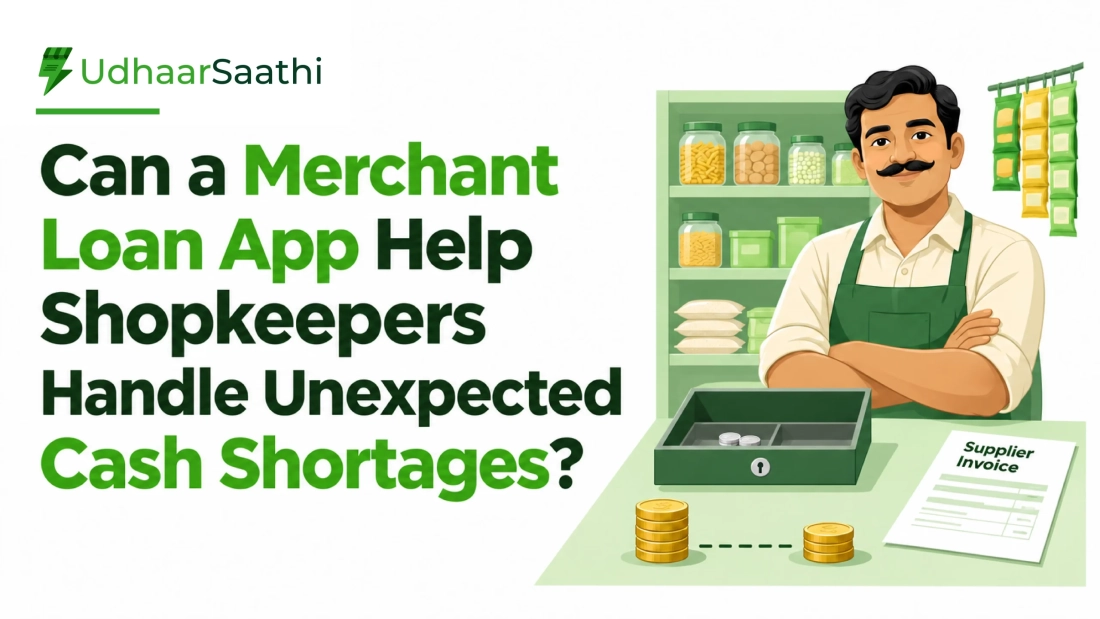
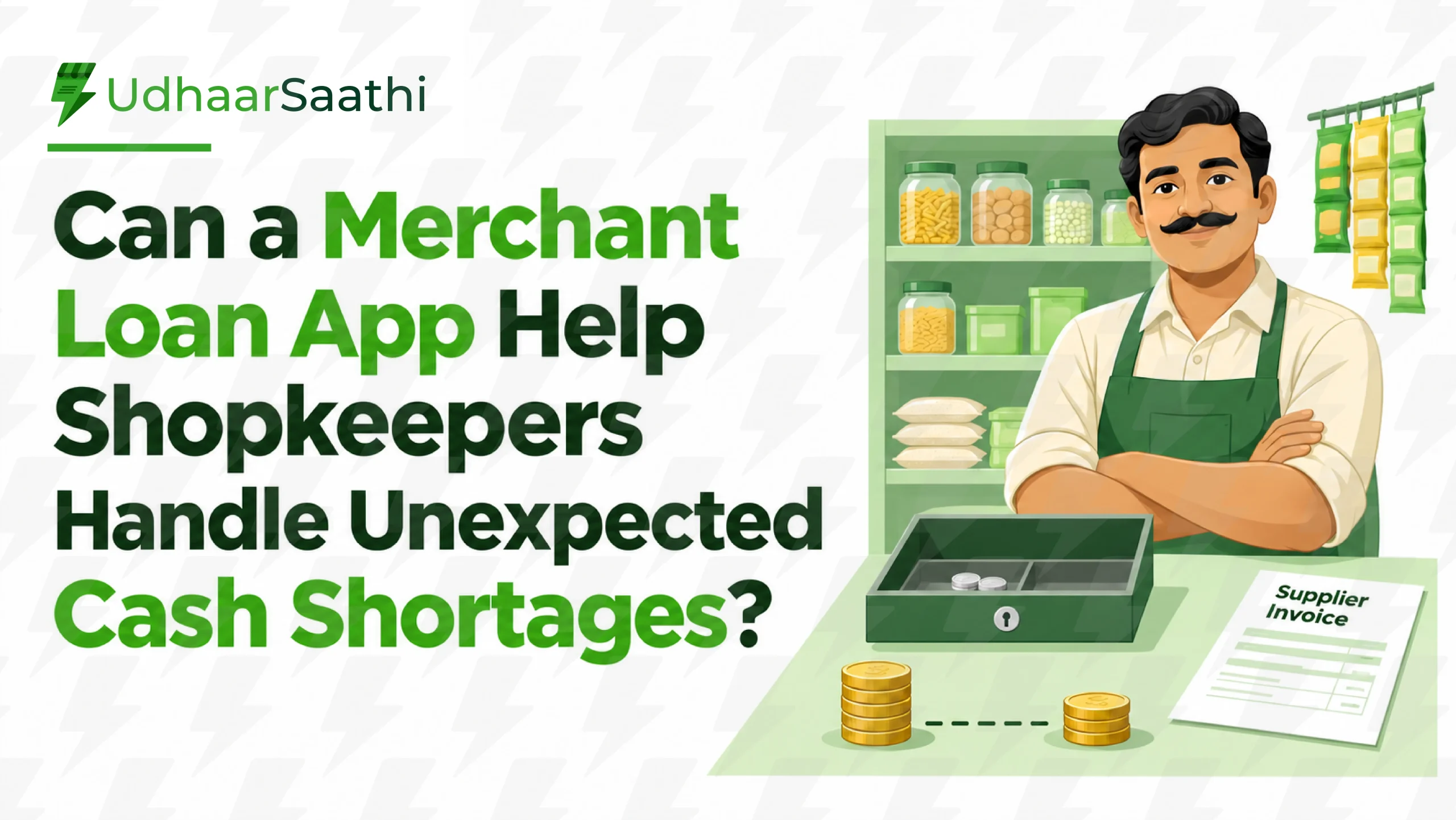
Can a Merchant Loan App Help Shopkeepers Handle Unexpected Cash Shortages?

Can a Merchant Loan App Help Shopkeepers Handle Unexpected Cash Shortages?

merchant loan app

A shop can look healthy from the outside and still run short of cash. The shelves are stocked, the counter is busy, and the daily sales add up. But much of the money is sitting elsewhere: in unsold stock, in udhaar given to regular customers, and in advance payments already made to suppliers. When an urgent expense lands, the drawer does not have enough to cover it.

This is where a merchant loan app can step in. It lets a business owner apply for working capital from a phone, with QR sales history helping assess the application, so there is no need to arrange collateral or visit a branch. Below are five ways it can support you during a shortage, followed by four steps to apply.

How Can a Merchant Loan App Help During Cash Shortages? 5 Reasons

1. Working Capital Without Collateral: Some merchant loan apps do not require borrowers to pledge assets as security. Check the specific product terms and eligibility criteria before applying.

2. Your Daily Sales are Part of the Picture: Depending on the lender’s assessment process, QR and UPI transaction records may help demonstrate business activity. However, payment records alone do not guarantee loan approval

3. Repayment in Small Daily Amounts: Some business loans use daily repayments, while others follow different schedules. Check the payment frequency and amount before accepting an offer. Make sure repayments leave enough cash for stock, supplier payments, and essential expenses, even when customer payments are delayed.

4. Clear Charges Before You Commit: Before accepting a loan, review the amount offered, applicable charges, and repayment schedule. Compare the total cost and proceed only if the terms fit your business’s cash flow.

5. Minimal Documents and a Digital Process: Depending on the lender, you may need to provide identity, banking, and business details for verification. Keep the requested documents ready and submit them through authorised channels. Timely repayments may help maintain a positive credit history, but they do not guarantee higher future loan limits or approval.
Cash shortages can arise before festival restocking, after an unexpected repair, or when customers delay paying their udhaar. Merchant funding may help eligible businesses address a temporary shortfall, but it should not replace sound cash-flow management.
Track customer credit, monitor supplier dues, and maintain a reserve where possible. Borrow only when the repayment terms are manageable.

How to Apply Through a Merchant Loan App in 4 Steps

Applying through a merchant loan app is usually short and handled on your phone. Here is how the process generally works:
Step What you do What to keep in mind
Check Eligibility Review the lender's requirements and provide the requested business details. Eligibility depends on the lending partner's criteria and assessment.
Complete Verification Submit the required identity, banking, and business information. Use the authorised application channel and provide accurate details.
Review Loan Details Examine the amount offered, charges, and repayment schedule. Proceed only if the total cost and repayments are manageable.
Get Funds and
Repay Smoothly
Finish the required formalities if you accept the offer. Disbursal depends on approval and the applicable loan terms.
Before applying, keep the required documents ready and assess how much your business can afford to repay. Review the loan agreement and repayment schedule before accepting an offer. Missing payments may result in additional charges and could affect your credit history, so account for slower sales periods when assessing affordability.

Be Ready Before the Next Shortage

Unexpected cash shortages can affect even a busy shop. Tracking customer credit, planning supplier payments, and maintaining a cash reserve can help you manage these gaps. When additional funding is necessary, assess whether borrowing is affordable before applying.
Merchant loan apps like UdhaarSaathi offer collateral-free working capital of up to ₹2,50,000 for kirana stores and other small businesses, repaid in small daily amounts from your sales, with costs shown upfront and subject to eligibility.
Cash Flow Management Tips For Kirana And Retail Shops

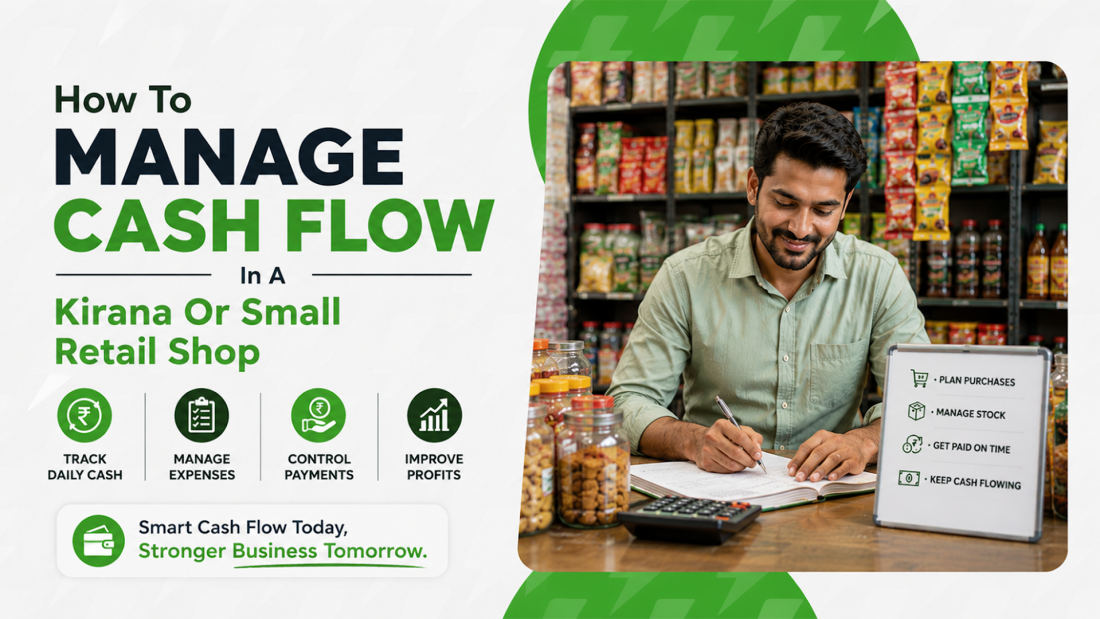
How To Manage Cash Flow In A Kirana Or Small Retail Shop

How To Manage Cash Flow In A Kirana Or Small Retail Shop

Cash Flow Management Tips For Kirana And Retail Shops

From the street, kirana stores almost always have customers coming and going throughout the day. For a casual observer, it may seem like the owners are minting money. That said, as an owner of a kirana store or similar small retail businesses, you know that all that activity doesn’t always translate to all-out profits.

The reality is that suppliers’ payments are due almost every other day. You may have a “uddhar” system for some of your regulars who buy now and pay at the end of the month. Then come the utility bills, salaries, and other unforeseen expenses. The bottom line: cash shortages at the end of the week.

This is where cash flow management is important. It ensures that you have enough cash flow for your kirana shop’s operations despite all the daily business expenses. This post will help you do just that with practical Cash flow management tips for small merchants.

Why Do Busy Shops Still Face Cash Shortages?

The common misconception is that the world of small retail merchants is “Ache sales = good business”. The reality is that good daily sales figures and a healthy cash flow are not always the same thing. Here is why: 

  • Thin margins: FMCG goods usually have razor-thin margins, which leave little behind after you factor in all the operational costs. 
  • Money stuck in inventory: While some products sell fast, there are others, like premium products or those that have a seasonal demand, or the buffer stock kept for the festive season, that tie up money. 
  • The Udhaar cycle: Many kirana stores still give small credit to regular customers. The sales continue to happen, but the money hasn’t come in yet. 
  • Daily business expenses: Every business has to deal with small expenses, be it utility bills, repairs, or consumables that also eat into your cash flow. 
  • Supplier payments: Despite all of the above factors, supplier payment cycles fall on fixed dates.

If you put all of these factors together, they create a steady outflow every week, which leaves a small gap between your sales and this outflow. 

What Healthy Cash Flow Looks Like In A Small Retail Shop?

Having a healthy cash flow doesn’t mean that your small business or kirana stores don’t face any of the above problems. It means that your business can handle them without draining your working capital for the shop at any time. Here is what that looks like: 

  • You can pay your suppliers on time. 
  • The business can handle temporary slow periods. 
  • The business still has a reserve of emergency funds, and you are not tapping into them frequently. 

On the other hand, here are some signs to help you determine if you are indeed facing cash-flow problems. 

  • You struggle to pay your suppliers on time.
  • You are reducing your inventory to compensate. 
  • You are using your personal savings for business expenses. 
  • You are struggling with managing daily business expenses. 

Implementing proper cash flow management, especially for small merchants, can ensure these problems are nipped in the bud. 

Five Numbers Track To Determine The State Of Your Cash Flow As A Small Merchant

Cash flow management for small merchants does not need complex accounting or software. All you need to track a few key numbers regularly. 

Daily Sales vs Daily Collections

Sales and collections are not the same thing. Your total sales figure includes credit given to customers. Your collections figure is the actual cash and UPI payments you received. Track the latter as it gives you a clearer picture of real cash availability.

Fast-Moving vs Slow-Moving Inventory

Dead inventory is essentially cash sitting on a shelf gathering dust. Review your shelves weekly and stock less of the slow movers. This “frozen” money could be better used as working capital for shop needs like restocking high-demand items.

Weekly Supplier Outflow

Write down every supplier payment due in the coming week. Knowing exactly how much money will leave your shop every week will help you to plan expenses better throughout the week. 

Fixed Monthly Expenses

Just as in the case of supplier payments, track your fixed monthly payments like utility bills, software subscriptions, and salaries closely. When you have this figure too on the tip of your fingers manging cash flow management for your kirana shop gets even easier. 

Emergency Cash Buffer

Calculate how many days your shop can run if sales suddenly drop by 50%. Aim for a small reserve that covers at least one week of fixed costs and essential restocking. 

How Small Retail Shops Can Improve Cash Flow Without Increasing Sales

Tracking key numbers does go a long way in helping with cash flow management for small merchants. That said, you can further improve your financial position by making small changes to how you run your daily operations, like so:

Reduce Over-Stocking

Do not buy more than you need just because a supplier offers a small discount. Focus your cash on products that sell within a week. This keeps your money liquid and reduces the risk of goods expiring.

Set Clear Credit Limits for Customers

Trust is the foundation of a neighborhood kirana, but you must balance it with discipline. Set a maximum credit limit for every “udhaar” customer. When they reach that limit, ask for a partial payment before giving more items on credit.

Negotiate Smarter Supplier Cycles

Talk to your distributors about split payments. Instead of paying a large lump sum once a month, ask if you can pay in smaller weekly installments. This aligns your outflows with your daily income patterns.

Use UPI Records to Understand Business Patterns

Your digital payment history is a goldmine of information. Use your UPI app records to see which days are your busiest. This helps you plan when to keep more cash ready for supplier visits.

Separate Personal and Shop Expenses

Many small merchants make the mistake of taking money from the shop drawer for personal groceries or household bills. Use a dedicated bank account for your business. Pay yourself a fixed “salary” and avoid touching the shop’s operational funds for personal needs.

Additional Planning For High-Pressure And Low Sales Periods

As kirana shop owners and small retail merchants, you also have to plan separately for festive seasons and school reopenings, which bring a spike in demand. On the other end of the spectrum, the moonsoons or off-peak seasons in a tourist area where footfall drops dramatically also need equal attention.  Planning for these seasonal cycles ahead of time helps you improve your cash flow significantly. 

When Does a Shortfall in Cash Flow Become A Real Business Problem?

Short fluctuations in cash flow are normal in every business. That said, if the occasional cash flow fluctuations become a pattern, especially when in the red, you need to start paying serious attention to cash flow management as a small merchant. Here are some of the warning signs to look out for: 

  • You keep delaying stock purchases. 
  • Your suppliers stop extending credit due to repeated delays or missed payments.  
  • You are losing customers cause you are no longer stocking what they need. 

When that happens, you are losing sales, which slowly starts a downward spiral. At this point in time, you are reaching the point that can affect your business’s continuity. A possible solution to help you break this cycle is to consider working capital support for your shop. 

How Can Working Capital Support Help Your Kirana Store Or Small Retail Shop With Cash-Flow Problems?

Sometimes, despite following every cash flow management tip for small merchants or every business finance tip for retailers, you may need external help to keep your business running smoothly. 

Instead of dipping into your personal accounts or your savings, you can turn to working capital support. Think of it as a small loan you take that acts as a financial bridge to cover those cash flow gaps. 

Unlike traditional loans, working capital support works as follows: 

  • Eligibility based on your cash flow: Your regular QR code collections may be considered as part of the lender’s assessment process, along with other eligibility criteria.
  • Collateral-Free Options: Certain working capital options may be available without collateral, subject to lender policies and eligibility assessment.
  • Daily Repayment Structure: Some working capital products may offer smaller, more frequent repayment structures aligned to business cash flow patterns.
  • Transparent Charges: Applicable fees, charges, and repayment terms are disclosed before loan acceptance.

How UdhaarSaathi (Formerly InstaVyapaar) Helps With Cash Flow Management For Small Merchants?

UdhaarSaathi (Formerly InstaVyapaar) offers collateral-free working capital for kirana stores, retail shops, pharmacies, salons, and other small businesses. Here is how they function: 

  • You have access to loan amounts of up to ₹2,50,000 based on your UPI and QR collection history. 
  • All costs are shown upfront before you proceed with the loan. 
  • Daily repayment structure that aligns with your business’s daily cash flow.
  • Consistent repayment behaviour may improve eligibility for higher borrowing limits over time, subject to lender assessment.
  • Loans are facilitated by RBI-registered lending partners

The application process generally includes eligibility assessment, verification, review of terms, and disbursal upon approval.

Bonus: Simple Cash Flow Management Checklist For Small Merchants

A small change in habits can have a significant impact on your business’s cash flow. Here is a simple weekly routine you can follow to do just that. 

  • Every Monday: Review all your dues for the week. 
  • Every Wednesday: Identify your slow-moving, near-expiry products. Use discounts to clear them.
  • Every Friday: Review your cash and UPI collection for the week, follow up on customer dues. Pay off your suppliers on time. 
  • Every month: Add up all fixed expenses, check your emergency buffer, and adjust next month’s stock plan based on this month’s demand. 

Summing It Up

Ups and downs when it comes to cash flow are a part and parcel of running a kirana store or a small retail business. That said, having cash flow issues doesn’t mean that the business is failing. Supplier dues, inventory purchases, seasonal demand changes, and daily expenses create constant movement of money in and out of the shop, and the goal is to manage those gaps without disrupting daily operations.

And when temporary support is needed, working capital options designed around real business cash flow can help shop owners stay prepared without putting assets at risk.

Explore working capital options with UdhaarSaathi (Formerly InstaVyapaar) when needed.

FAQs

What is cash flow management for small merchants?

Cash flow management for small merchants is the process of tracking how much money comes into your shop versus how much goes out. It means ensuring you have enough ready cash or bank balance to pay for daily expenses and inventory without waiting for “udhaar” to return.

Why does a kirana shop face cash shortages even with good sales?

Kirana store owners may face cash shortages due to unpaid customer credit, slow-moving inventory, and timing gaps between sales and available working capital.

How can small retailers manage daily business expenses better?

You can start by separating your personal and business money. Use a daily log to track every small payout, including tea, transport, and cleaning. Setting aside a fixed amount every morning for these small costs prevents them from eating into your restocking budget.

When should a shop owner consider working capital support?

A business owner may consider evaluating working capital options during periods of temporary cash-flow pressure or planned inventory expansion, depending on business requirements. It is also useful for maintaining stock consistency when your cash is temporarily tied up in customer credit.

Blog-02 (1)

How to Choose the Best Business Loan App

How to Choose the Best Business Loan App

Running a shop means managing expenses every single day. From restocking inventory to paying staff and suppliers, cash flow gaps are a normal part of business.
Business loan apps have made it easier for shop owners to access working capital. But with so many options available, choosing the right app can feel confusing.

The best business loan app is not the one that promises the fastest money, it’s the one that fits your shop’s cash flow, repayment ability, and long-term stability.

Why Choosing the Right Business Loan App Matters

A loan that doesn’t match your business income can create unnecessary pressure. Hidden charges, rigid EMIs, or unclear repayment terms often turn short-term support into long-term stress.

That’s why shop owners need to evaluate loan apps carefully, based on structure, transparency, and repayment flexibility, not just approval speed.

  1. Understand What Your Shop Actually Needs

Before applying, be clear about why you need the loan. Is it for inventory, daily expenses, or managing short-term cash-flow gaps?

Knowing the purpose helps you avoid borrowing more than required and choose a loan that stays manageable.

  1. Focus on Repayment Structure, Not Just Loan Amount

Many shop owners look only at the loan amount offered. What matters more is how often repayments happen and whether they match your daily or weekly earnings.

Apps that align repayments with business cash flow are usually better suited for shops than rigid monthly EMIs.

  1. Check for Transparency in Terms and Charges

A reliable business loan app clearly shows the loan amount, repayment schedule, and charges before you proceed. If key details are hidden in fine print or revealed later, it’s a sign to be cautious.

  1. Avoid Apps That Create Urgency or Pressure

Loan apps that push “limited-time offers” or “instant approvals” often prioritise speed over suitability. Good business credit allows you to understand the terms calmly and make an informed decision.

  1. Prefer Collateral-Free Business Loans

Most shop owners don’t want to risk property, gold, or personal assets. Collateral-free loans assess your business activity instead of asking for security. Look for apps where loan limits start responsibly and grow with regular repayment.

  1. Understand How Eligibility Is Assessed

Good loan apps explain what they look at, such as bank inflows, QR collections, and business activity. Clear eligibility criteria help avoid surprises later in the loan journey.

  1. Check Data Privacy and Security Practices

Since you share sensitive information, make sure the app clearly explains how your data is used and protected. Responsible platforms do not sell or misuse customer data.

  1. Choose Apps with Regulated Lending Partners

Always check whether the loan is provided through RBI-registered lending partners. This ensures fair practices, defined grievance redressal, and better accountability.

  1. Read Reviews with Context

User reviews can be helpful, especially when they mention repayment issues, hidden charges, or customer support experiences. Look for consistent patterns rather than isolated opinions.

What a Good Business Loan App Should Feel Like

A good loan app should make borrowing feel manageable and predictable, not stressful.
You should always know:

  • – How much you’re borrowing
    – How you’ll repay
    – What happens if business slows down

If any of this feels unclear, it’s worth pausing before proceeding.

Some platforms, like UdhaarSaathi (Formerly InstaVyapaar), are built specifically around how everyday businesses earn and repay. Instead of focusing only on speed or large loan amounts, such platforms prioritise cash-flow–aligned repayments, clear terms, and responsible credit growth.

For shop owners, this approach often works better in the long run because the loan adjusts to business reality, not the other way around.

The best business loan app for your shop is not the fastest or the flashiest. It’s the one that feels predictable, transparent, and manageable.

Choose a loan that supports your daily operations, respects your cash flow, and allows you to build credit steadily without stress or surprises.

FAQs

What is the best business loan app for shop owners?
The best business loan app is one that offers clear terms, predictable repayments, and a repayment structure that matches your shop’s daily or weekly cash flow—not just fast approvals.
Yes, as long as the loan is offered through RBI-registered lending partners and the app clearly explains its terms, repayment process, and data privacy practices.
Many business loan apps offer collateral-free loans, meaning you don’t need to give property, gold, or assets as security. Eligibility is usually based on business activity and cash flow.
Shop owners should compare repayment structure, transparency of charges, collateral requirements, data usage policies, and whether the lender is regulated—not just the loan amount or approval speed.
Avoid apps that create urgency, hide charges in fine print, or promise very high loan amounts instantly. A good loan app gives you time and clarity to decide calmly.
Blog-03

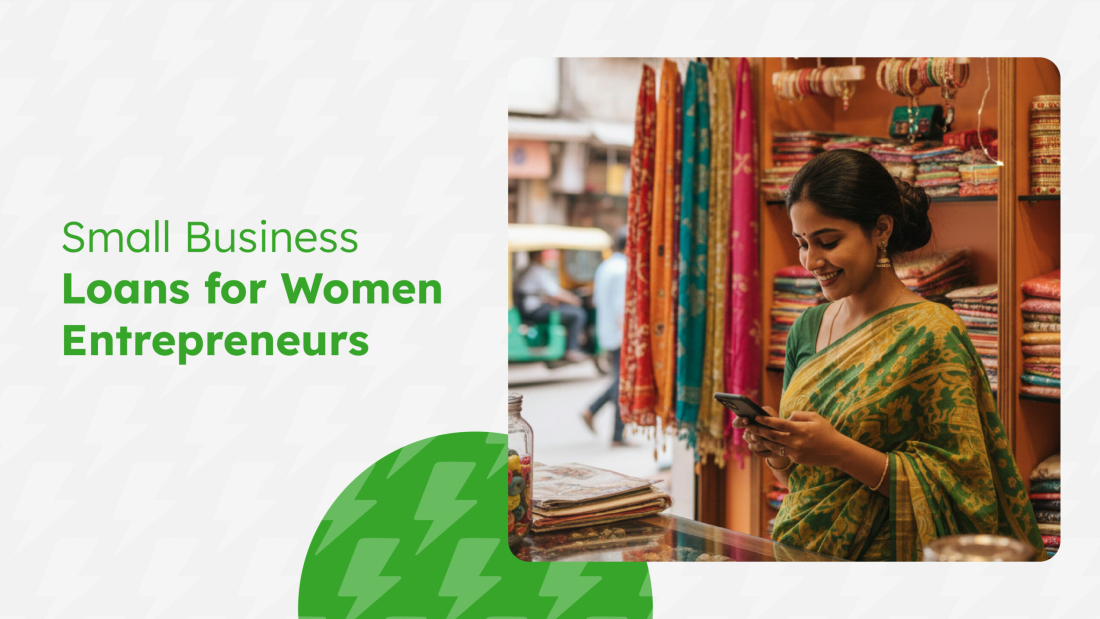
Small Business Loans for Women Entrepreneurs

Small Business Loans for Women Entrepreneurs

Women entrepreneurs play a growing role in India’s small business ecosystem, yet access to finance remains a major challenge. To address this gap, several banks, NBFCs, and government-backed schemes offer business loans specially designed for women.

These loans aim to support financial independence by offering lower interest rates, relaxed collateral requirements, and targeted support. Depending on the scheme and business profile, funding can range from small working-capital loans to expansion capital of up to ₹1 crore.


Why Business Loans for Women Matter 

Women-led businesses play a critical role in India’s economy, especially at the micro and small business level. From kirana stores and tailoring units to service businesses and home-grown enterprises, women entrepreneurs contribute significantly to local employment and household income. Yet, access to timely and affordable credit remains one of the biggest challenges they face.

Many women entrepreneurs have strong business ideas and steady operations, but limited financial backing. This is often not due to a lack of capability but due to structural barriers in traditional lending systems. Women-led businesses commonly face challenges such as:

  • – Limited access to property for collateral
    Many women do not own property or assets in their name, making it difficult to qualify for traditional secured loans.
  • – Shorter or thinner credit histories
    Even when businesses are stable, women may have fewer past loans or formal credit records, which can affect eligibility.
  • – Lower initial capital
    Women often start businesses with personal savings or family support, leading to smaller initial investments and slower early growth.

Specialised business loan schemes for women help bridge this gap by shifting the focus away from assets and towards business activity, earning patterns, and growth potential. These schemes recognise that a business’s ability to repay matters more than ownership of property.


Key Eligibility Criteria for Women Business Loans

While requirements vary by lender and scheme, most women-focused business loans consider the following:


Ownership

The business must be owned or controlled by women, usually with at least 51% shareholding.


Age

Applicants are generally between 18 and 65 years, with some lenders allowing repayment up to 80 years at loan maturity.


Business Type
Eligible structures typically include:

  • – Sole proprietorships
    – Partnerships
    – Private limited companies


Business Experience

Most lenders prefer businesses with 1–3 years of operations, though some schemes support first-time or early-stage businesses.


Credit Profile

A CIBIL score of 650–700 or higher improves approval chances, though some government schemes are more flexible.


Turnover

Minimum annual turnover often starts around ₹10 lakh, depending on the loan size and scheme.


Popular Business Loan Schemes for Women in India

India offers several government-backed and bank-led business loan schemes specifically designed to support women entrepreneurs. These schemes aim to reduce common barriers such as lack of collateral, limited credit history, and high borrowing costs:

Pradhan Mantri Mudra Yojana (PMMY)

Offers collateral-free loans up to ₹10 lakh under Shishu, Kishor, and Tarun categories for micro and small businesses.

Stand-Up India Scheme

Provides loans from ₹10 lakh to ₹1 crore for women entrepreneurs starting greenfield projects in manufacturing, services, or trading.

Udyogini Scheme

Supports women in rural and underdeveloped areas with loans up to ₹3 lakh, often with interest subsidies.

Cent Kalyani Scheme

Offered by the Central Bank of India, this scheme provides loans up to ₹1 crore for women-led MSMEs without collateral.

Stree Shakti Package (SBI)

Offers interest rate concessions (up to 0.5% lower) for businesses where women hold a majority stake.

Annapurna Scheme

Designed for women running food-related businesses, offering loans up to ₹50,000 for kitchen equipment and working capital.


Where UdhaarSaathi (Formerly InstaVyapaar) Fits In

While government-backed schemes offer strong long-term support, they can sometimes involve longer processing times, detailed documentation, and fixed eligibility requirements. For women entrepreneurs who need faster clarity, simpler documentation, and repayment structures that match daily business realities, digital lending platforms can play a supportive role.

UdhaarSaathi (Formerly InstaVyapaar) is designed for everyday business owners who want clear, predictable working capital without collateral. Instead of focusing only on assets or paperwork, UdhaarSaathi (Formerly InstaVyapaar) assesses business activity and cash flow to offer loans that are easier to manage.

What sets UdhaarSaathi (Formerly InstaVyapaar) apart is its approach to repayment and growth. Loans are structured around how businesses earn, with predictable repayments, clear terms, and credit limits that grow gradually through regular repayment, not pressure or promises.

For women-led businesses managing daily operations, inventory cycles, or short-term cash-flow gaps, this approach can offer a more flexible and manageable borrowing experience alongside traditional schemes.

Why do some women entrepreneurs choose UdhaarSaathi (Formerly InstaVyapaar)

  • – No collateral or property required
    – Clear terms explained upfront
    – Repayments designed around business cash flow
    – Responsible credit growth over time
    – Fully digital and simple process

A practical complement, not a replacement

Government schemes and platforms like UdhaarSaathi (Formerly InstaVyapaar) serve different needs. Many women entrepreneurs use a mix of options over time, starting with accessible working capital and gradually moving towards larger, long-term funding as their business grows.

Choosing the right option depends on urgency, loan size, repayment comfort, and documentation readiness.


Important Things to Consider Before Applying

Before choosing any business loan, especially under women-focused schemes, it’s important to understand a few practical factors that can affect approval, cost, and overall experience.


Documentation Requirements

Most lenders ask for documents to understand your identity, business activity, and repayment ability. Commonly required documents include:

  • – Aadhaar and PAN for identity and KYC verification
    – Business registration or Udyam certificate, if available
    – Last 2 years’ Income Tax Returns (ITR), where applicable
    – 6–12 months of bank statements to assess cash flow
    – A basic business plan, especially for startups or larger loan amounts

Having these documents ready can significantly speed up the application process.


Collateral-Free Options

Many women-focused loan schemes, particularly government-backed ones, offer collateral-free loans. This makes credit accessible even for women who do not own property, gold, or other assets.

These loans are usually assessed based on business activity, income patterns, and repayment capacity rather than physical security.


Interest Rate Benefits

Women entrepreneurs often receive interest rate concessions, typically ranging from 0.25% to 1% lower than standard business loan rates. These benefits can reduce the overall cost of borrowing, especially for long-term loans.


Processing Time

Processing time can vary widely:

  • – Government schemes may take longer due to detailed checks and documentation
    – NBFCs and digital lenders often provide faster clarity and decisions, sometimes at a slightly higher cost
  •  

Choosing between the two depends on urgency, loan size, and comfort with documentation.


What Documents Are Required for an UdhaarSaathi (Formerly InstaVyapaar) Loan?

In comparison to traditional schemes, UdhaarSaathi (Formerly InstaVyapaar) keeps documentation minimal and digital, focusing on business activity rather than paperwork.

Typically required documents include:

  • – Aadhaar for identity verification
    – PAN for KYC checks
    – Active bank account details for disbursal and repayments
    – Basic business information, including active QR collections

All checks are completed digitally, with clear communication at every step.

Whether you choose a government-backed scheme or a digital platform like UdhaarSaathi (Formerly InstaVyapaar), the right loan offers clarity, manageable repayments, and room to grow—without unnecessary stress or surprises.

FAQs

Do women entrepreneurs need collateral to apply for business loans?
Not always. Many government-backed schemes and digital lenders offer collateral-free loans, where approval is based on business activity and cash flow rather than property or assets.
Most lenders ask for Aadhaar, PAN, bank statements, and business details. Some schemes may also require ITRs or a basic business plan, depending on the loan size and vintage.
Yes. Many lenders offer interest rate concessions for women, typically ranging from 0.25% to 1% lower than standard business loan rates.
Approval timelines vary. Government schemes may take longer due to documentation and verification, while NBFCs and digital platforms usually provide faster clarity.
InstaVyapaar focuses on minimal documentation, digital verification, and loans designed around business cash flow, making the process simpler and more predictable for everyday business owners.
Blog-01

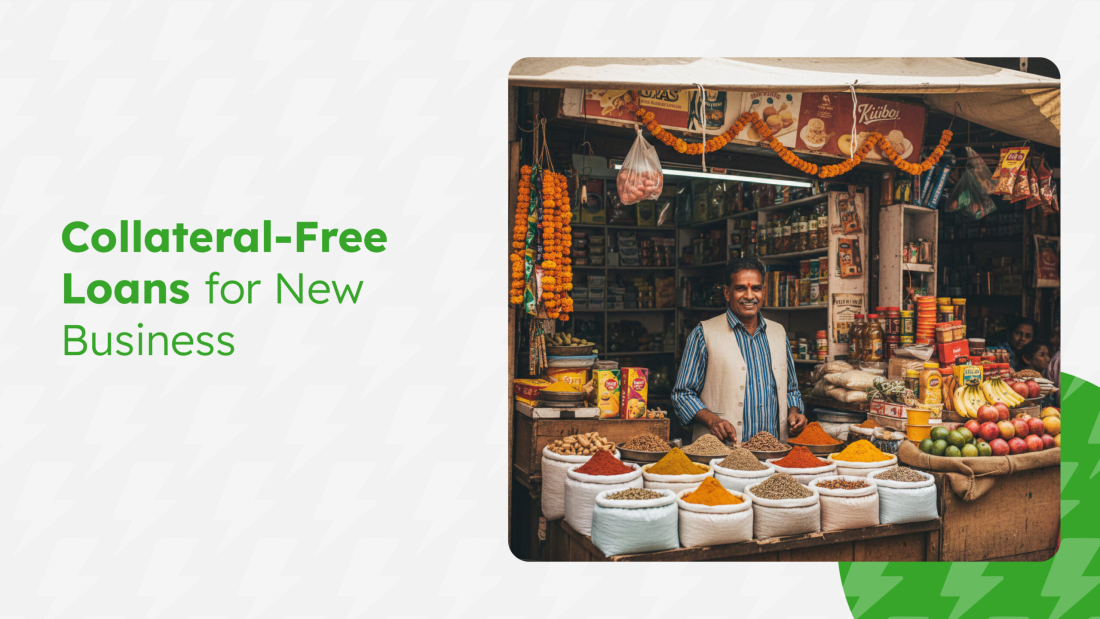
Collateral-Free Loans for New Businesses


Collateral-Free Loans for New Businesses


Starting a new business is exciting, but it’s also capital-intensive. From setting up inventory and paying suppliers to managing daily expenses, cash flow becomes a real challenge in the early stages. For many new business owners, the biggest question is simple:

Can I get a business loan without collateral? The short answer is: Yes, but with conditions. The long answer needs some clarity.

What Does “Collateral-Free” Actually Mean?

A collateral-free loan means you don’t need to pledge assets like property, gold, machinery, or fixed deposits to secure the loan.

Traditionally, banks relied heavily on collateral because new businesses didn’t have:

  • Long financial histories
  • Proven repayment records
  • Stable income patterns

But lending has evolved.

Today, many lenders assess business behaviour instead of assets.


Why New Businesses Struggle to Get Traditional Loans

Most new businesses face three common hurdles:

  1. No credit history
    Without past loans or repayment records, lenders find it harder to assess risk.
  2. Irregular cash flow
    Early-stage businesses don’t always have predictable monthly income.
  3. Lack of assets
    Many small merchants and first-time entrepreneurs simply don’t own property or valuable assets.


How Collateral-Free Loans for New Businesses Work Today

Collateral-free business loans are now possible because lenders look beyond traditional guarantees and assess how a business actually operates. Instead of relying on assets, they evaluate alternative data such as daily or frequent bank inflows, QR or digital payment collections, overall business activity patterns, and repayment behaviour over time. This helps lenders understand the consistency, stability, and earning capacity of a business, making it possible to offer credit without asking for collateral.


What New Businesses Should Expect (Realistically)

While collateral-free loans are possible, expectations need to be realistic.

Lower starting limits

New businesses usually start with smaller loan amounts.

Gradual growth

Loan limits increase as repayment discipline is demonstrated.

Clear repayment structure

Repayments are planned to stay manageable, often aligned with business cash flow.

No instant large loans

If a platform promises high limits immediately with no checks, that’s a red flag.


Who Is Most Likely to Get a Collateral-Free Loan?

Not all new businesses are evaluated the same way when it comes to collateral-free loans. Lenders are more likely to support businesses that show regular activity and consistent income patterns, even if they are newly set up. What matters most is not the size of the business, but:  

  • Kirana and retail stores with daily sales
  • Service businesses with regular customer payments
  • Merchants using QR or digital payment systems
  • Businesses with active bank accounts and steady inflows

Formal registration helps, but consistent activity matters more.


What to Look for Before Taking a Collateral-Free Loan

Before applying, always check:

  • Are the repayment terms explained upfront?
  • Is the repayment amount predictable?
  • Are there hidden deductions or surprise charges?
  • Does the lender allow credit growth over time?

A good business loan should reduce stress, not add to it.


So, Are Collateral-Free Loans for New Businesses Really Possible?

Yes, but not as shortcuts. They work best when:

  • Loans start small
  • Repayments are clear and manageable
  • Credit grows through discipline, not promises

For new businesses, the goal isn’t to borrow big, it’s to borrow sensibly and build credit over time.

Collateral-free loans have opened new doors for small and new businesses, but only when they are built around real cash flow, clarity, and responsibility.

If you’re starting, focus on building consistent business activity, keeping repayments regular and choosing lenders who value transparency over speed. That’s how collateral-free credit becomes a tool not a burden.

FAQs

Can a new business really get a loan without collateral?
Yes. Many lenders today offer collateral-free loans to new businesses by assessing cash flow, business activity, and repayment behaviour instead of physical assets.
A collateral-free loan does not require you to pledge property, gold, machinery, or fixed deposits as security. Approval is based on business data and repayment capacity.
They can be slightly higher than secured loans, as the lender takes more risk. However, clear terms and predictable repayments matter more than just the rate.
InstaVyapaar is a loan platform for business owners that offers collateral-free working capital for everyday business needs, with repayments designed around how businesses earn.
New businesses usually start with smaller loan amounts. Limits may increase over time with regular and disciplined repayment.
Not always. While registration can help, many lenders focus more on active business operations and cash flow.
  • Factors that help include:
  • Regular business income
  • Active bank account
  • QR or digital payment collections
  • Consistent business activity
They can be risky if the terms are unclear. Always check repayment schedules, charges, and deductions upfront before borrowing.
Repayments are often planned to stay predictable and manageable. Some lenders align repayments with business cash flow instead of fixed monthly EMIs.
Yes. Regular and on-time repayment often helps unlock higher loan limits as your credit history builds.